Let’s be honest: the idea of investing in space can feel like science fiction. But here’s the deal—it’s not. It’s a real, rapidly maturing sector with a tangible economic impact. From the satellites mapping our coffee farms to the rockets launching internet constellations, space commercialization is booming. For investors, that means opportunity. But it also demands a unique approach to capital allocation. This isn’t your typical blue-chip stock market.
Throwing money at the “final frontier” without a strategy is a sure way to see your capital drift into the void. You need a plan, a framework for navigating the high-risk, high-potential landscape of space tech. Let’s dive into the strategies that can help you build a portfolio that’s grounded, even when its focus is among the stars.
Understanding the Investment Terrain: It’s Not One Big Market
First things first. “Space” isn’t a single industry. It’s a collection of interconnected, yet distinct, verticals. Allocating capital wisely starts with mapping this terrain. You’ve got to know what you’re looking at.
The Core Verticals for Strategic Investment
Think of it as a stack, a ladder from Earth to orbit and beyond.
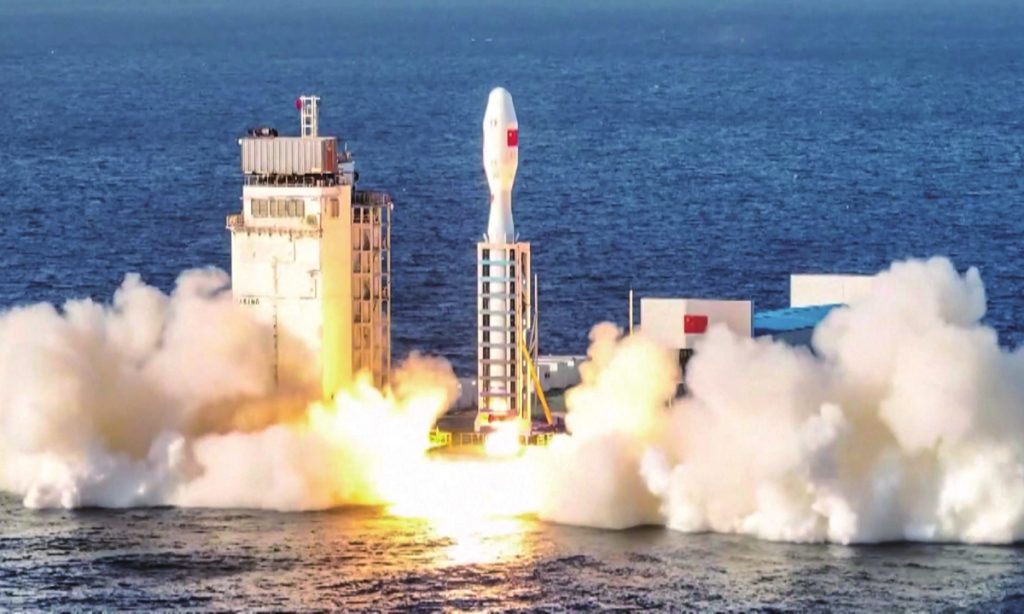
- Launch Services: The railroads to orbit. Companies building rockets (both large and small) to get stuff up there. It’s capital-intensive and fiercely competitive, honestly.
- Satellite Manufacturing & Hardware: The “stuff” itself. This includes everything from tiny CubeSat components to massive geostationary satellites. Innovation here is relentless.
- Earth Observation & Data Analytics: Arguably the most commercially mature sector. Satellites collect images and data, which is then sold and analyzed for agriculture, insurance, climate monitoring, you name it.
- Satellite Communications (Satcom): The internet-from-space arena. Think mega-constellations like Starlink. It’s a play on global connectivity.
- In-Space Services & Infrastructure: The emerging frontier. This includes satellite servicing (refueling, repairing), space debris removal, and even in-orbit manufacturing. It’s futuristic but gaining steam.
Capital Allocation Frameworks for the Space Age
Okay, you know the players. Now, how do you spread your bets? A rigid, one-size-fits-all approach won’t cut it. Here are some effective frameworks to consider.
The Core & Explore Model
This is a classic for a reason. Allocate the bulk of your capital—say, 70-80%—to more established, “down-to-earth” segments. We’re talking about companies in Earth observation data analytics or proven satellite component manufacturers. These firms often have revenue, contracts, and a clearer path to profitability.
Then, use the remaining 20-30% as “explore” capital. This is for the high-risk, high-reward bets: an innovative launch startup or a company pioneering on-orbit servicing technology. This part of your portfolio is your moonshot allowance. It keeps you exposed to explosive growth without jeopardizing your entire stake.
Stage-Based Allocation: Matching Risk to Development
Space companies evolve through clear stages. Aligning your capital with these stages is a smart move.
| Stage | Focus | Capital Allocation Mindset |
| Early/Venture | Tech development, prototype launches | Smaller bets, high tolerance for failure. Think angel or early VC. |
| Growth/Scale | Commercial deployment, scaling production | Larger tickets for companies proving demand. Recurring revenue is key. |
| Mature/Public | Market expansion, profitability | Core holdings. Focus on strong balance sheets and competitive moats. |
Mixing across stages can balance your portfolio’s risk profile. A mature satellite operator can provide stability that offsets the volatility of a growth-stage launch provider.
Thematic Investing: Riding a Specific Wave
Instead of spreading capital thin, you might concentrate on a single, powerful trend. For instance, the “data-as-a-service” theme. You’d invest across the stack that enables it: satellite manufacturers, data downlink stations, and the analytics software platforms. This creates a focused, synergistic portfolio around one big idea.
Another hot theme? Space sustainability and traffic management. As orbit gets crowded, solutions for debris removal, collision avoidance, and satellite servicing become critical. Allocating capital here is a bet on the long-term health of the space economy itself.
Key Risks and How to Mitigate Them in Your Strategy
You can’t talk about space investing without staring the risks right in the face. They’re… substantial. Technical failure is obvious—a rocket blowing up is bad for business. But the less dramatic risks can be just as dangerous.
- Regulatory Choke Points: Launch licenses, spectrum rights, orbital slots—governments hold the keys. A change in policy can make or break a company.
- Launch Dependency: For everyone except launch providers, you’re reliant on someone else’s success. Diversify across launch partners if possible.
- Long Cash Burn Cycles: These companies can go years without profit. Ensure your allocation size matches your time horizon. Don’t invest money you’ll need soon.
- Market Timing: The “if you build it, they will come” fallacy. Is the market ready for the service? For in-space manufacturing, maybe not yet. For Earth imaging, absolutely.
Putting It All Together: A Practical Approach
So, what does this look like in practice? Imagine an investor with a moderate risk appetite. They might use a Core & Explore model as their base. Their core (70%) sits in a mix of a publicly-traded satellite data firm and an ETF focused on aerospace and defense, which provides broad exposure.
Their explore portion (30%) is split thematically. Half goes to a private equity fund specializing in early-stage space infrastructure—a way to get professional management for those risky bets. The other half is allocated to a couple of publicly-traded, growth-stage companies in the satcom and launch sectors.
This approach gives them stability, thematic focus, and a toe in the venture-style water—all while consciously managing the sector’s unique risks. It’s not about finding one winner; it’s about constructing an ecosystem that can thrive as the whole industry lifts off.
In the end, investing in space commercialization isn’t just a financial calculation. It’s a belief in a specific future. The capital allocation strategies we use are the tools to build a bridge to that future, one prudent, informed decision at a time. The sky is not the limit anymore—it’s the marketplace. And how you allocate your capital determines your seat at the table.